PET-FRIENDLY ICE MELTS
A de-icer you can spread on a path the dog walks down ten minutes later.
Frequently Asked Questions
Given these risks, it is clear that great care must be taken when choosing a deicing product to use this winter. It is prudent for owners to check the labels of any commercially available products before buying them as they may still contain rock salt, but fewer quantities of it with rounded edges for a softer impact. Nevertheless, salt remains a risk. So look for products stating that they do not contain any rock salt or urea whatsoever. Urea can also be known as carbonyl diamide or carbamide resin and is also used in many fertilizers as a source of nitrogen. Excess levels caused by ingesting urea, or absorbing it through the skin, can lead to blood and kidney problems in cats and dogs.
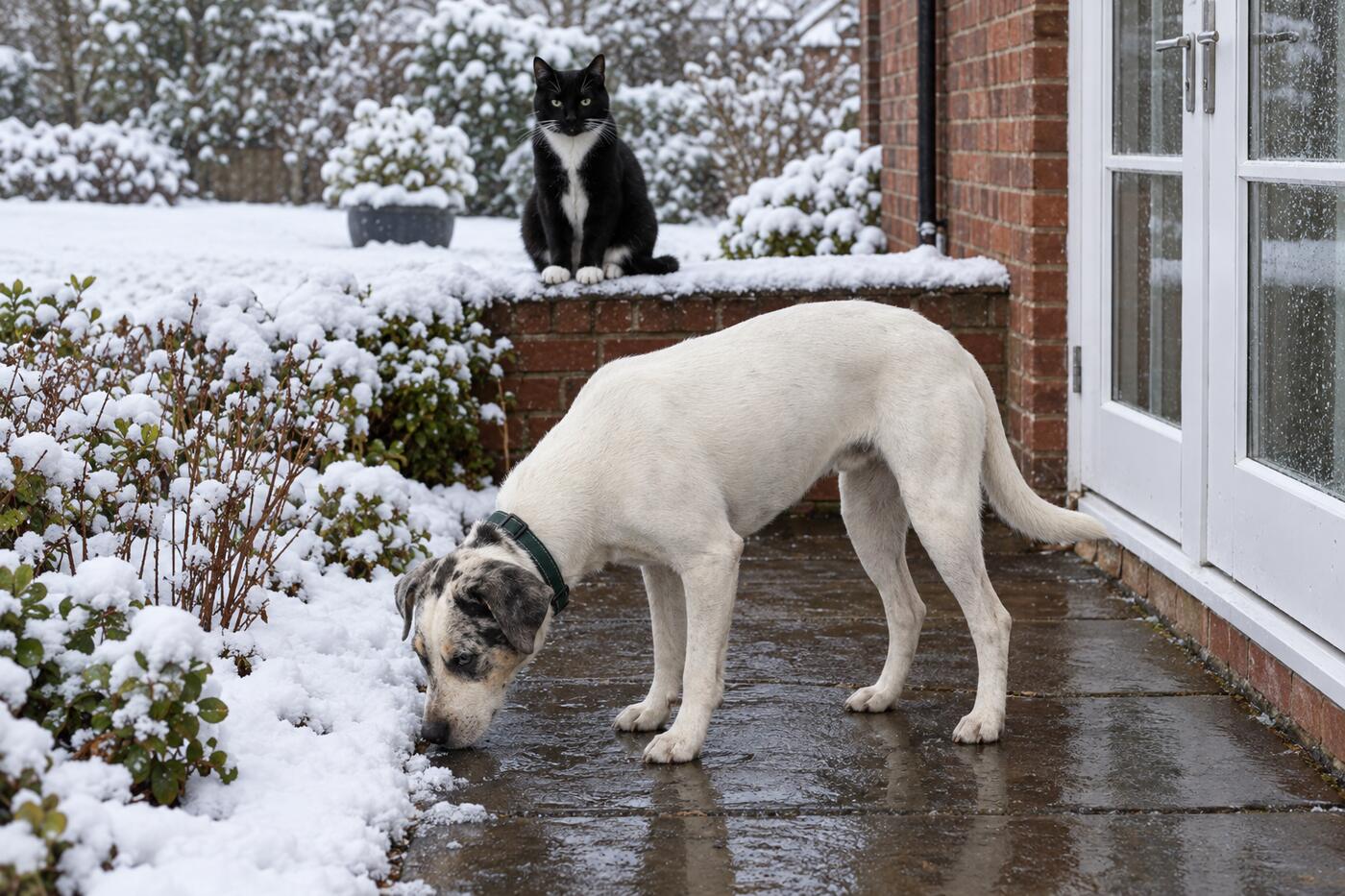
Glycols are the dangerous ones. Propylene glycol and ethylene glycol are what antifreeze is made from, and they can kill a cat or a dog that swallows them. After that, avoid anything that works by drawing moisture out of the surface it lands on, because it does the same to a paw pad and leaves it dry and cracked. Rock salt is an irritant underfoot and gets carried indoors in the fur. Urea is worth avoiding too. Sand, grit and cat litter are harmless, but they only give grip, they do not clear ice. EcoGrit is made from all natural products, contains no rock salt and no urea, and clears the ice.
A quick and easy way to reduce the risk and clear away dangerous snow, frost or ice is to spread grit of some form or another onto the road to add traction and help melt the ice so that it turns back into a liquid and runs safely off the surface into the gutters.